Capabilities
From network data to optimised decisions
AI-DNO guides diagnostic network planning through a clear path: ingest, baseline, optimize, and compare.
01
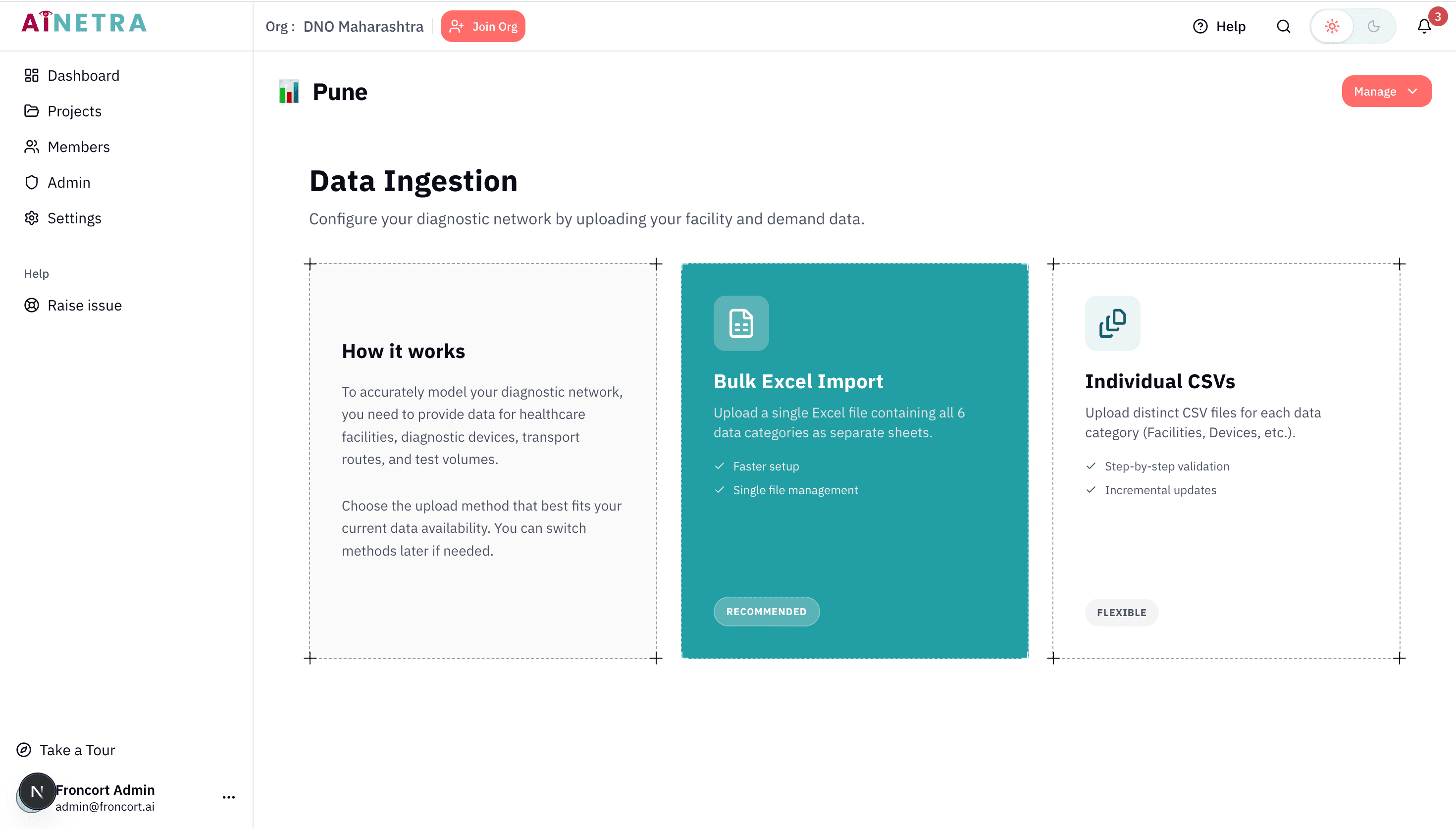
Ingest your network
Bring facility, laboratory, device, demand, and referral data into one project. Review ingestion status and unlock the baseline once your network is approved.
02
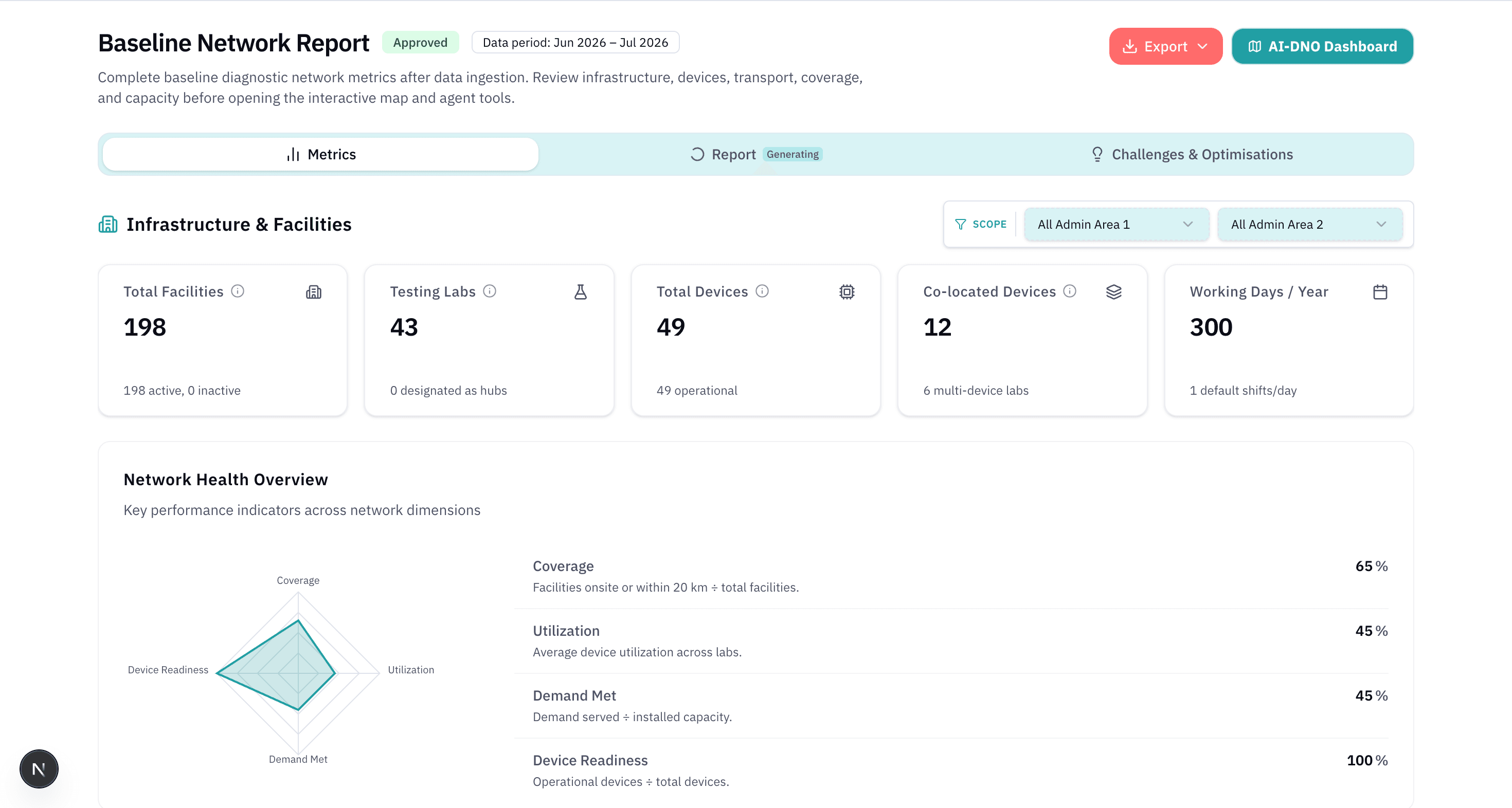
Understand the baseline
Explore utilization, accessibility, cost, and capacity across admin areas. Generate narrative baseline reports and surface network challenges before you optimize.
03
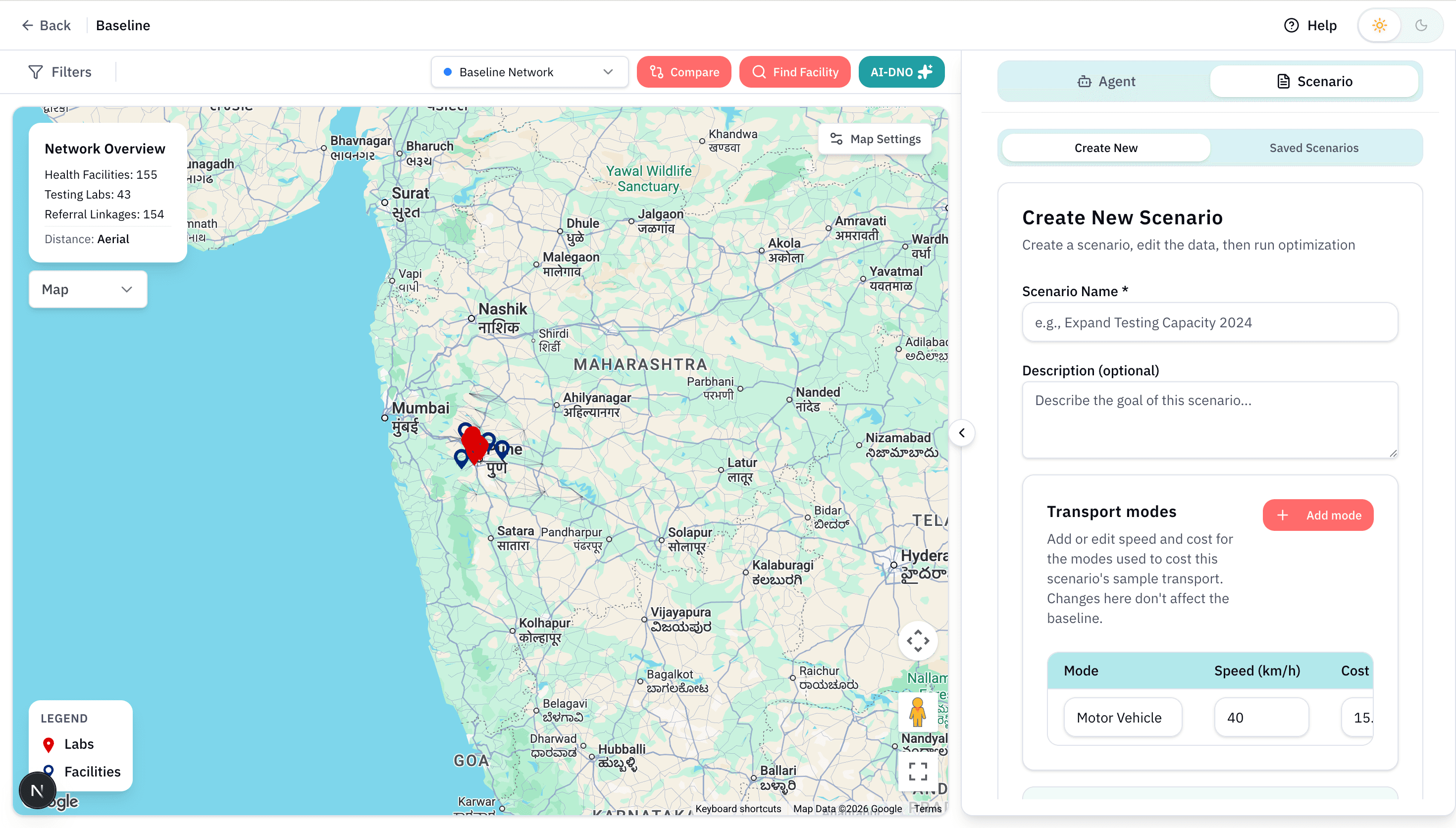
Optimize with scenarios
Create what-if scenarios, set goals, and run optimization. Compare relocation, expansion, and redesign actions against the baseline on an interactive map.
Collaboration
Built for diagnostic network impact
AI-DNO brings engineering and diagnostic strategy together to help programmes design networks that are accessible, efficient, and equitable.

Froncort
Platform & AI Engineering
Builds the AI-DNO application — data pipelines, optimization workflows, map intelligence, and the decision-support experience for diagnostic network teams.
FIND
Diagnostic Strategy & Operations
Provides domain expertise on diagnostic networks and testing operations, ensuring optimisation insights align with real-world laboratory capacity and access goals.
FAQ
Questions about AI-DNO
Essentials on what the platform does, how baselines and scenarios work, and how to share results with your team.
AI-DNO is a Diagnostic Network Optimization platform. It helps public health teams design more accessible, efficient, cost-effective, and equitable diagnostic networks — from data ingestion through baseline review, scenario planning, and map-based comparison.